 Today's Gold Price: ₹ 150,000
Get Ready to Glow - Exclusive Festive Deals on the Way!
Today's Gold Price: ₹ 150,000
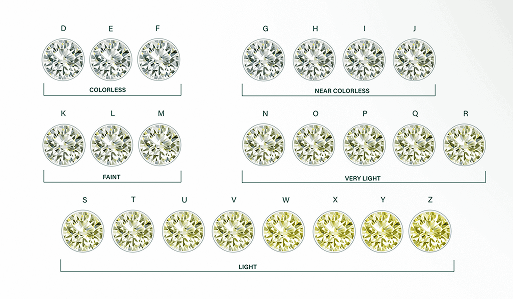
Diamond color refers to the presence of yellow or brown tints in a diamond. The less
color a diamond has, the rarer and more valuable it is. GIA grades diamond color on a
scale from D (colorless) to Z (light yellow or brown).
D–F | Colorless
These diamonds appear completely clear and icy white. They are extremely rare and
prized for their pure brilliance and luxury appeal. Best for those who want the most
premium, high-end look.
G–J | Near Colorless
These diamonds look colorless to the naked eye and offer an excellent balance
between beauty and value. They reflect light beautifully and are a popular choice for
engagement rings and fine jewellery.
K–M | Faint Color
These have a subtle warm tint, usually visible when compared side-by-side with higher
grades. They are more budget-friendly and can look stunning in yellow or rose gold
settings.
N–Z | Light to Noticeable Color
These diamonds show visible yellow or brown tones. Some people choose them for
their unique character or vintage charm, but they are lower in value compared to
higher color grades.
Tip for customers:
If you want the best value without compromising beauty, G–H color diamonds are
often the smartest choice.
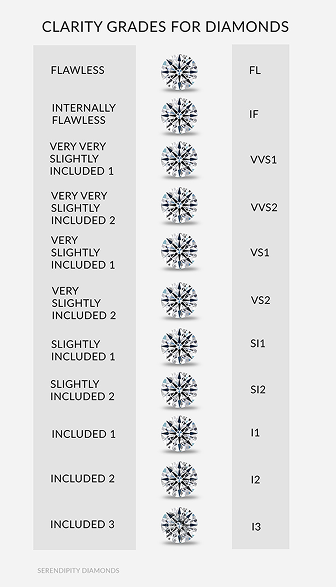
Clarity measures the internal inclusions and external blemishes in a diamond. These
are natural characteristics formed when the diamond was created deep within the
earth.
FL – IF | Flawless / Internally Flawless
No inclusions or blemishes visible under 10x magnification. Extremely rare and mainly
chosen by collectors or for investment pieces.
VVS1 – VVS2 | Very, Very Slightly Included
Tiny inclusions that are very difficult to see even under magnification. These diamonds
look perfectly clean and are considered premium quality.
VS1 – VS2 | Very Slightly Included
Minor inclusions that are not visible to the naked eye. These offer excellent beauty and
are one of the most popular clarity choices.
SI1 – SI2 | Slightly Included
Inclusions are visible under magnification and sometimes to the naked eye, depending
on their position. These are budget-friendly and can still look beautiful if well chosen.
I1 – I3 | Included
Inclusions are clearly visible and may affect brilliance and durability. These are lower
in
price and usually chosen for casual or fashion jewellery.
Tip for customers:
For everyday wear and best value, VS and SI1 clarity grades are ideal because they
look clean without the high cost of flawless stones.
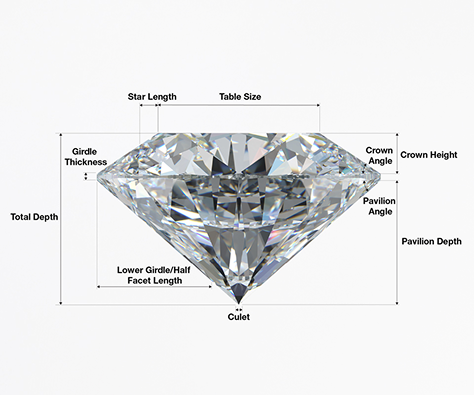
Cut is the most important factor affecting a diamond s sparkle. It determines how well
the diamond reflects light.
Excellent Cut
Perfect proportions and angles. Reflects maximum light, creating outstanding brilliance,
fire, and sparkle. Best for a premium, eye-catching look.
Very Good Cut
Reflects most light beautifully with minimal loss. A great balance of quality and value.
Good Cut
Provides decent sparkle, but some light may escape from the sides or bottom. Suitable
for budget-conscious buyers.
Fair – Poor Cut
Light leaks out, making the diamond appear dull and lifeless. Not recommended if
sparkle is important to you.
Tip for customers:
Always prioritize cut quality, even over color or clarity, because a well-cut diamond
will always look more brilliant.
A diamond s beauty is not defined by just one factor.
The perfect diamond is about balance:
• A well-cut diamond will sparkle even if the color or clarity is slightly lower.
• A high color diamond with poor cut may still look dull.
• Choosing the right mix helps you get the best look within your budget.
Gold is more than just a precious metal – it s an emotion, an investment, and a
tradition. Understanding gold purity, making charges, and GST helps you make
confident and informed jewellery choices.
Understanding Gold Purity (Karats)
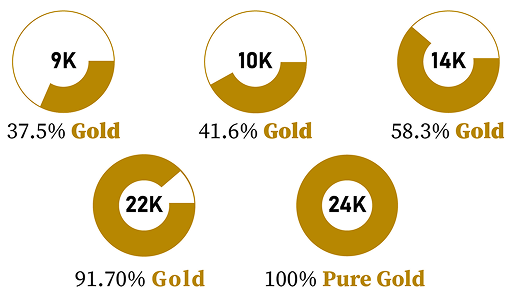
Gold purity is measured in Karats (K), which indicates how much pure gold is
present in the metal. The higher the karat, the purer and softer the gold.
24K Gold – 99.9% Pure
24K gold is the purest form of gold available. It has a rich, deep yellow colour and
is extremely soft. Because of its softness, it is not suitable for making jewellery
and is mainly used for coins, bars, and investment purposes.
Best for: Investment, gifting coins, wealth storage.
22K Gold – 91.6% Pure
22K gold is mixed with small amounts of other metals to make it stronger while
still retaining its rich yellow colour. It is the most preferred choice for traditional
Indian jewellery, including bridal sets, bangles, and heritage designs.
Best for: Bridal jewellery, traditional designs, heavy gold pieces.
18K Gold – 75% Pure
18K gold contains 75% pure gold and 25% alloy metals, making it more durable
and suitable for everyday wear. It is widely used for diamond jewellery, modern
designs, and stone-studded pieces as it holds gemstones securely.
Best for: Daily wear, diamond jewellery, contemporary designs.
Why Purity Matters
• Higher purity = richer colour + higher value
• Lower purity = stronger metal + better durability
• The right choice depends on usage, design, and lifestyle
Understanding Making Charges
Making charges are the cost of craftsmanship, design, and labour involved in
creating your jewellery piece. This includes shaping, setting, polishing, and
finishing the jewellery.
How Making Charges Are Calculated
Making charges are usually applied in two ways:
• Per gram basis, or
• As a percentage (typically 6% 25%) of the gold price
The exact amount depends on:
• Complexity of the design
• Type of craftsmanship (handcrafted, machine-made, custom design)
• Detailing, carving, and stone setting involved
Why Making Charges Vary
• Simple designs → Lower making charges
• Intricate, heavy, or custom designs → Higher making charges
• Bridal and statement jewellery often have higher making charges due to
detailed workmanship
How These 3 Factors Work Together
The final price of your gold jewellery is calculated as:
(Gold Weight × Gold Rate) + Making Charges + 3% GST
Understanding this breakdown ensures:
• You know exactly what you re paying for
• There are no surprises at checkout
• You can compare value confidently